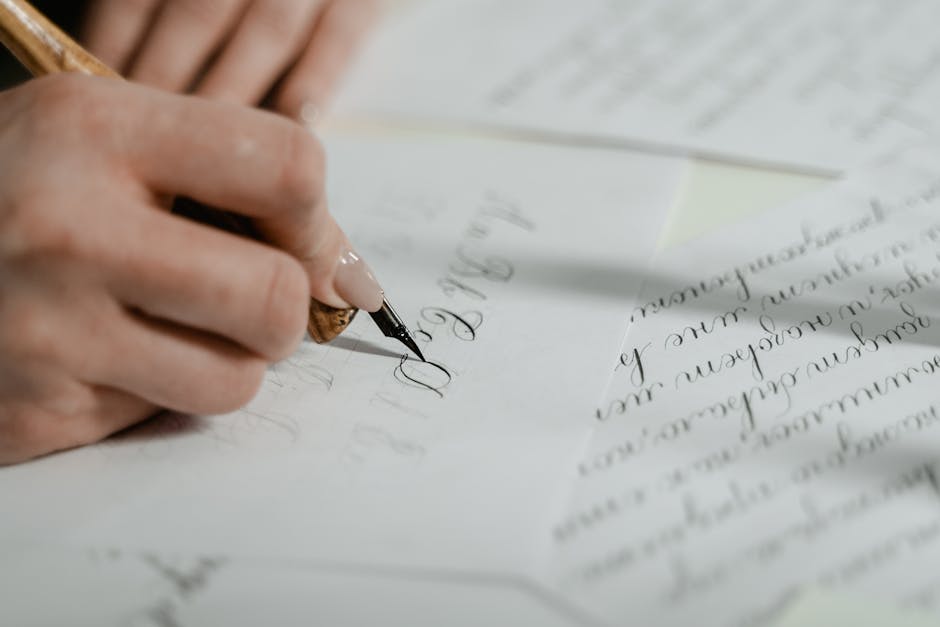
The Artistry of Penmanship: Crafting Beauty Through Handwriting
In an era dominated by digital communication, the art of penmanship remains a timeless testament to human expression. The elegant strokes of ink on paper carry history, emotion, and individuality that screens cannot replicate.
For those who cherish the tactile experience of writing, mastering penmanship is both a skill and an art form. It bridges generations, connecting us to our past while offering personal satisfaction in the present.
The Historical Significance of Penmanship
Penmanship has played a pivotal role in shaping civilizations throughout history. From ancient cuneiform tablets to medieval illuminated manuscripts, handwriting was once the primary means of recording information.
During the Renaissance, calligraphy flourished as artists like Albrecht Dürer refined lettering techniques. These developments laid the foundation for modern script styles still practiced today.
The Industrial Revolution brought mass-produced printed materials, yet handwritten documents retained their prestige. Personal letters from notable figures often showcased exceptional penmanship skills.
- Cursive scripts: Evolved from Roman square capitals through centuries of refinement
- Block printing: Enabled standardized text production but diminished individual stylistic variation
- Digital impact: Modern technology threatens traditional handwriting practices despite its enduring cultural value
Mental Benefits of Practicing Good Penmanship
Research indicates that practicing good penmanship enhances cognitive function. The deliberate movements required engage fine motor skills and promote mental focus.
A study published in the Journal of Educational Psychology found that students with better handwriting performed higher on writing assessments than peers with poor penmanship.
Handwriting activates different brain regions compared to typing. This distinction may explain why handwritten notes are often remembered better than typed ones.
The physical act of forming characters strengthens neural pathways associated with memory retention and language processing.
Fundamental Principles of Effective Writing Technique
Mastering basic writing principles creates a strong foundation for developing advanced penmanship skills. Proper posture and grip significantly influence writing quality.
Holding the pencil at a 45-degree angle allows for optimal control and fluid motion across the page. Experimentation helps determine the most comfortable position for each writer.
Keeping wrists relaxed prevents tension that can lead to uneven strokes or fatigue during prolonged writing sessions. Regular practice reinforces muscle memory over time.
Choosing the Right Tools for Success
Selecting appropriate writing instruments greatly impacts the outcome of your work. Fountain pens offer smooth flow and rich ink coverage suitable for formal compositions.
Gel pens provide consistent line weight ideal for everyday note-taking. Ballpoint pens remain practical for quick documentation though they lack the aesthetic qualities of finer tools.
Specialty nibs allow customization based on preferred stroke thickness and ink consistency. Exploring different options helps identify the perfect match for individual style.
Paper choice also matters; high-quality sheets reduce bleed-through and enhance ink visibility. Testing various combinations refines personal preferences effectively.
Developing Consistent Letter Formation
Consistency in letter shapes contributes to professional appearance and legibility. Establishing uniform slant angles improves overall composition balance.
Practicing connected cursive forms strengthens hand-eye coordination while promoting natural flowing motions between characters.
Varying pressure controls stroke thickness creating visual interest without sacrificing clarity. Controlled variations add personality to otherwise monotonous text.
Styling Techniques for Aesthetic Appeal
Elevating standard writing involves incorporating decorative elements thoughtfully. Flourishes and embellishments transform simple lines into artistic expressions.
Bold initials serve as effective focal points when beginning new passages or emphasizing key ideas within longer texts.
Symmetrical layouts create pleasing visual patterns particularly useful in formal invitations and certificates requiring precise alignment.
Colorful inks introduce vibrant accents enhancing contrast against light-colored papers commonly used for official correspondence.
Modern Applications of Traditional Skills
While digital communication dominates daily interactions, there exists growing appreciation for handwritten elements in contemporary contexts. Wedding invitations frequently feature beautifully penned addresses adding personal touch.
Personalized thank-you notes demonstrate genuine effort and care which digital messages often fail to convey adequately. Handwritten birthday cards maintain emotional resonance difficult to achieve through electronic formats.
Business professionals benefit from maintaining neat signatures reinforcing brand identity and professionalism. Signature samples appear consistently across legal documents ensuring authenticity verification.
Calligraphers find increasing demand for custom signage and event programs where handcrafted visuals outperform machine-generated alternatives in terms of uniqueness and charm.
Nurturing Long-Term Improvement
Sustained progress requires regular practice routines tailored to individual goals. Setting achievable milestones keeps motivation levels high while preventing burnout.
Varying exercises challenges different aspects of writing ability such as speed, precision, and creativity simultaneously. Rotating between drills maintains engagement and avoids repetitive strain injuries.
Seeking feedback from experienced writers provides objective perspectives identifying areas needing improvement objectively rather than relying solely on self-assessment.
Judging success shouldn’t be limited to technical perfection alone; celebrating small victories along the journey fosters positive reinforcement essential for long-term commitment.
Conclusion
Penmanship endures as more than mere functionality—it represents connection, culture, and craftsmanship woven together uniquely by every practitioner.
To begin your own journey toward mastery, start with simple daily exercises focusing on fundamentals before gradually advancing toward more complex techniques and creative applications.
“`

news is a contributor at A Letter Writer. We are committed to providing well-researched, accurate, and valuable content to our readers.